
An official website of the United States government

Liquid Biopsy Consortium

Featured Infographic

Liquid Biopsy: A new, noninvasive technique that can detect disease biomarkers in blood, urine, and sputum.
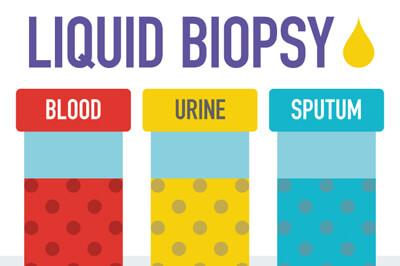
Liquid Biopsy: A new, noninvasive technique that can detect disease biomarkers in blood, urine, and sputum.


View the infographic

In the era of personalized medicine, having minimally invasive methods to determine and follow the molecular composition and characterization of a patient’s tumor over time will help gain a broader understanding of the disease. One such approach is liquid biopsy : measurements to characterize the molecular level of the tumor and monitor genetic changes over time using repeat sampling of biofluids. Liquid biopsy generally refers to detecting and measuring circulating tumor cells (CTC), circulating tumor DNA (ctDNA), circulating exosomes and other analytes in body fluids, such as serum, plasma, urine, etc.

On This Page

  • All Heading 2s will automatically be pulled in to this list.
  • Do not edit the content on this template.

About the Liquid Biopsy Consortium

The Liquid Biopsy Consortium is an Academic/Industrial Partnership program designed to advance and validate Liquid Biopsy technologies specifically targeted for early stage cancer detection. The goal is to test body fluids such as blood, urine, saliva, stool, and sputum from patients suspected to have early stage cancer as well as those at high risk of developing cancer. The Liquid Biopsy Consortium is also working on methods to distinguish cancer from benign disease; or aggressive from indolent cancers. Projects from funded sites focus on the development of new tools/methods/assays and/or validations of existing technologies/methods involving the capture of DNA, RNA, or exosomes in circulating body fluids.

Funding Opportunity

No matching Funding Opportunities were found.

View All Funding Opportunities

Grantee Details

PI Name Sort descending PI Organization Title Grant Number Program Official
Huang, Yijian

Emory University
United States

Analytic diagnosis methods for disease ruling 5R01CA283687-02 Guillermo Marquez, Ph.D.
Huberty, Jennifer Lynne

University Of Texas Hlth Science Center
United States

Consumer-based meditation app, Calm, for treatment of sleep disturbance in hematological cancer patients 5R01CA262041-05 Marjorie Perloff, M.D.
Huberty, Jennifer Lynne

University Of Texas Hlth Science Center
United States

Consumer-based meditation app, Calm, for treatment of sleep disturbance in hematological cancer patients 5R01CA262041-05 Marjorie Perloff, M.D.
Huh, Warner King

University Of Alabama At Birmingham
United States

Misoprostol to Optimize Prevention of Cancer of the Cervix: A Randomized Trial (MISOPCx Project) 3R01CA279021-02S1 Vikrant Sahasrabuddhe, M.B.B.S., M.P.H., Dr.P.H.
Hui, David

University Of Tx Md Anderson Can Ctr
United States

Strategies for Personalizing Oxygen and support Therapies for dyspnea in Oncology 5R01CA288515-02 Brennan Streck, Ph.D., RN, M.P.H.
Hui, David

University Of Tx Md Anderson Can Ctr
United States

Strategies for Personalizing Oxygen and support Therapies for dyspnea in Oncology 5R01CA288515-02 Brennan Streck, Ph.D., RN, M.P.H.
Hundley, William Gregory

Wake Forest University Health Sciences
United States

Improving Exercise Capacity with a Tailored Physical Activity Intervention in Lymphoma Patients Undergoing Treatment 5R33CA226960-05 Eileen Dimond, R.N., M.S.
Hundley, William Gregory

Wake Forest University Health Sciences
United States

Improving Exercise Capacity with a Tailored Physical Activity Intervention in Lymphoma Patients Undergoing Treatment 5R33CA226960-05 Eileen Dimond, R.N., M.S.
Hundley, William Gregory

Wake Forest University Health Sciences
United States

Improving Exercise Capacity with a Tailored Physical Activity Intervention in Lymphoma Patients Undergoing Treatment 5R33CA226960-05 Eileen Dimond, R.N., M.S.
Hur, Chin

Columbia University Health Sciences
United States

Optimal Colorectal Cancer Surveillance Strategy for Lynch Syndrome by Genotype 3R01CA257333-05S1 Matthew Young, Ph.D.
Hutson, Alan David

Roswell Park Cancer Institute Corp
United States

Cancer Immunoprevention Network (CIP-Net) Resource Coordinating Center 1U24CA305623-01 Altaf Mohammed, Ph.D.
Huttenhower, Curtis

Broad Institute, Inc.
United States

PROSPECT: Pathways, Risk factors, and mOleculeS to Prevent Early-onset Colorectal Tumors 3OT2CA297578-01S1 Asad Umar, D.V.M., Ph.D.
Ibsen, Stuart Duncan

Oregon Health & Science University
United States

Distinguishing Pancreatic Cancer from Benign Pancreatic Disease using Nanoparticle-based Biomarkers 5R37CA258787-04 Matthew Young, Ph.D.
Im, Eun-Ok

University Of Texas At Austin
United States

Cancer Pain Management: A Technology-Based Intervention for Asian American Breast Cancer Survivors 5R33CA280979-04 Brennan Streck, Ph.D., RN, M.P.H.
Im, Eun-Ok

University Of Texas At Austin
United States

Cancer Pain Management: A Technology-Based Intervention for Asian American Breast Cancer Survivors 5R33CA280979-04 Brennan Streck, Ph.D., RN, M.P.H.

Program Contact(s)

Sudhir Srivastava, Ph.D., M.P.H.
Email: sudhir.srivastava@nih.gov

Christos Patriotis, Ph.D.
Email: christos.patriotis@nih.gov

Nicholas A. Hodges, Ph.D.
Email: nick.hodges@nih.gov

Guillermo Marquez, Ph.D.
Email: guillermo.marquez@nih.gov