
An official website of the United States government

Liquid Biopsy Consortium

Featured Infographic

Liquid Biopsy: A new, noninvasive technique that can detect disease biomarkers in blood, urine, and sputum.
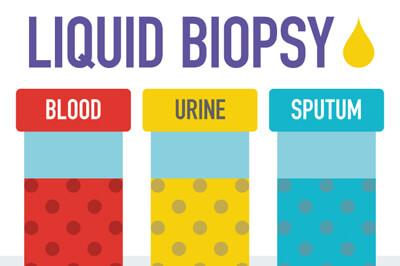
Liquid Biopsy: A new, noninvasive technique that can detect disease biomarkers in blood, urine, and sputum.


View the infographic

In the era of personalized medicine, having minimally invasive methods to determine and follow the molecular composition and characterization of a patient’s tumor over time will help gain a broader understanding of the disease. One such approach is liquid biopsy : measurements to characterize the molecular level of the tumor and monitor genetic changes over time using repeat sampling of biofluids. Liquid biopsy generally refers to detecting and measuring circulating tumor cells (CTC), circulating tumor DNA (ctDNA), circulating exosomes and other analytes in body fluids, such as serum, plasma, urine, etc.

On This Page

  • All Heading 2s will automatically be pulled in to this list.
  • Do not edit the content on this template.

About the Liquid Biopsy Consortium

The Liquid Biopsy Consortium is an Academic/Industrial Partnership program designed to advance and validate Liquid Biopsy technologies specifically targeted for early stage cancer detection. The goal is to test body fluids such as blood, urine, saliva, stool, and sputum from patients suspected to have early stage cancer as well as those at high risk of developing cancer. The Liquid Biopsy Consortium is also working on methods to distinguish cancer from benign disease; or aggressive from indolent cancers. Projects from funded sites focus on the development of new tools/methods/assays and/or validations of existing technologies/methods involving the capture of DNA, RNA, or exosomes in circulating body fluids.

Funding Opportunities

No matching Funding Opportunities were found.

View All Funding Opportunities

Grantee Details

PI Name Sort descending PI Organization Title Grant Number Program Official
Kanwal, Fasiha

Baylor College Of Medicine
United States

Risk Stratification for and Early Detection of Liver Cancer 5U01CA230997-08 Sidney Fu, M.D.
Kassie, Fekadu

University Of Minnesota
United States

Targeting tumor cell mitochondria for the prevention and treatment of lung cancer 1R01CA285608-01A1
Kelleher, Sarah

Duke University
United States

Randomized Controlled Trial of a Hybrid-Delivered Cognitive Behavioral Symptom Management and Activity Coaching Intervention for Stem Cell Transplant Patients 5R01CA291888-02 Brennan Streck, Ph.D., RN, M.P.H.
Kelleher, Sarah

Duke University
United States

Randomized Controlled Trial of a Hybrid-Delivered Cognitive Behavioral Symptom Management and Activity Coaching Intervention for Stem Cell Transplant Patients 5R01CA291888-02 Brennan Streck, Ph.D., RN, M.P.H.
Kelleher, Sarah

Duke University
United States

Randomized Controlled Trial of a Hybrid-Delivered Cognitive Behavioral Symptom Management and Activity Coaching Intervention for Stem Cell Transplant Patients 5R01CA291888-02 Brennan Streck, Ph.D., RN, M.P.H.
Kelleher, Sarah

Duke University
United States

Initial Testing of a Mobile App Pain Coping Intervention for Outpatient Oncology Settings 5R21CA273832-02 Brennan Streck, Ph.D., RN, M.P.H.
Kelleher, Sarah

Duke University
United States

Initial Testing of a Mobile App Pain Coping Intervention for Outpatient Oncology Settings 5R21CA273832-02 Brennan Streck, Ph.D., RN, M.P.H.
Khan, Seema Ahsan

Northwestern University At Chicago
United States

Northwestern Cancer Prevention Consortium 2UG1CA242643-07 Donald Johnsey
Khan, Seema Ahsan

Northwestern University At Chicago
United States

Determinants of transdermal drug delivery to the normal and the radiated breast 5R01CA235647-05 Brandy Heckman-Stoddard, Ph.D., M.P.H.
Khasabov, Sergey G

University Of Minnesota
United States

Treatment of cancer pain by lipid mediator Resolvin D1: role of Prostaglandin and Endocannabinoid signaling 5R01CA263777-05 Rachel Altshuler, Ph.D.
Khasabov, Sergey G

University Of Minnesota
United States

Treatment of cancer pain by lipid mediator Resolvin D1: role of Prostaglandin and Endocannabinoid signaling 5R01CA263777-05 Rachel Altshuler, Ph.D.
Kibel, Adam S

Brigham And Women'S Hospital
United States

Polygenic risk stratification combined with mpMRI to identify clinically relevant prostate cancer 5U01CA268810-03 Guillermo Marquez, Ph.D.
Kim, Michelle Kang

Cleveland Clinic Lerner Com-Cwru
United States

Assessing feasibility of gastric cancer screening in the US 1R37CA300540-01 Claire Zhu, Ph.D.
Kim, Hyung L

Cedars-Sinai Medical Center
United States

Intensive cholesterol-lowering intervention and anti-tumor immunity modeled in prostate cancer 5R01CA280060-03 Howard L. Parnes, M.D.
Kirkwood, Kimberly Saunders

University Of California, San Francisco
United States

Using microvolumetric cyst fluid proteolysis for early detection of pancreatic cancer 5U01CA282269-02 Matthew Young, Ph.D.

Program Contact(s)

Sudhir Srivastava, Ph.D., M.P.H.
Email: sudhir.srivastava@nih.gov

Christos Patriotis, Ph.D.
Email: christos.patriotis@nih.gov

Nicholas A. Hodges, Ph.D.
Email: nick.hodges@nih.gov

Guillermo Marquez, Ph.D.
Email: guillermo.marquez@nih.gov