
An official website of the United States government

Liquid Biopsy Consortium

Featured Infographic

Liquid Biopsy: A new, noninvasive technique that can detect disease biomarkers in blood, urine, and sputum.
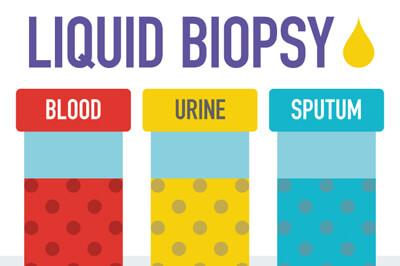
Liquid Biopsy: A new, noninvasive technique that can detect disease biomarkers in blood, urine, and sputum.


View the infographic

In the era of personalized medicine, having minimally invasive methods to determine and follow the molecular composition and characterization of a patient’s tumor over time will help gain a broader understanding of the disease. One such approach is liquid biopsy : measurements to characterize the molecular level of the tumor and monitor genetic changes over time using repeat sampling of biofluids. Liquid biopsy generally refers to detecting and measuring circulating tumor cells (CTC), circulating tumor DNA (ctDNA), circulating exosomes and other analytes in body fluids, such as serum, plasma, urine, etc.

On This Page

  • All Heading 2s will automatically be pulled in to this list.
  • Do not edit the content on this template.

About the Liquid Biopsy Consortium

The Liquid Biopsy Consortium is an Academic/Industrial Partnership program designed to advance and validate Liquid Biopsy technologies specifically targeted for early stage cancer detection. The goal is to test body fluids such as blood, urine, saliva, stool, and sputum from patients suspected to have early stage cancer as well as those at high risk of developing cancer. The Liquid Biopsy Consortium is also working on methods to distinguish cancer from benign disease; or aggressive from indolent cancers. Projects from funded sites focus on the development of new tools/methods/assays and/or validations of existing technologies/methods involving the capture of DNA, RNA, or exosomes in circulating body fluids.

Funding Opportunities

No matching Funding Opportunities were found.

View All Funding Opportunities

Grantee Details

PI Name Sort descending PI Organization Title Grant Number Program Official
Schaverien, Mark V

University Of Tx Md Anderson Can Ctr
United States

Lymphedema Prevention Through Immediate Lymphatic Reconstruction 5R01CA292908-02 Brandy Heckman-Stoddard, Ph.D., M.P.H.
Schedin, Pepper J

Oregon Health & Science University
United States

NSAIDs During Postpartum Involution for Breast Cancer Chemoprevention 5R01CA169175-11 Brandy Heckman-Stoddard, Ph.D., M.P.H.
Schenker, Yael

University Of Pittsburgh At Pittsburgh
United States

Patient-centered and efficacious advance care planning in cancer: the PEACe comparative effectiveness trial 5R01CA235730-06 Brennan Streck, Ph.D., RN, M.P.H.
Schmidt, Christian Maximillian

Indiana University Indianapolis
United States

Longitudinal Proteomic and Metabolomic Predictors of Pancreatic Cyst Malignant Progression and Early Stage Pancreatic Cancer 5U01CA239522-05 Claire Zhu, Ph.D.
Schmit, Stephanie L.

Cleveland Clinic Lerner Com-Cwru
United States

Variation in tumor-associated immune profiles and colorectal cancer outcomes 5R01CA248931-05 Asad Umar, D.V.M., Ph.D.
Schoen, Robert E.

University Of Pittsburgh At Pittsburgh
United States

Blood-Based Testing for Advanced Adenoma 5U01CA271884-04 Matthew Young, Ph.D.
Schoen, Robert E.

University Of Pittsburgh At Pittsburgh
United States

Blood-Based Testing for Advanced Adenoma 5U01CA271884-04 Matthew Young, Ph.D.
Schroeck, Florian R

Veterans Education/Res/Assn/North/Ne
United States

Replacing Invasive Cystoscopy with Urine Testing for Non-muscle Invasive Bladder Cancer Surveillance 5R37CA275916-03 Claire Zhu, Ph.D.
Schuetze, Scott Michael

University Of Michigan At Ann Arbor
United States

Early Phase Clinical Cancer Prevention Consortium 2UG1CA242632-06 Donald Johnsey
Sears, Rosalie C

Oregon Health & Science University
United States

An atlas of pancreatic tumorigenesis in the context of altered DNA repair occurring in high-risk individuals 4U01CA294548-02 Indu Kohaar, Ph.D., M.Phil., M.Sc.
Sears, Rosalie C

Oregon Health & Science University
United States

Validation of novel imaging and molecular tests for early detection of pancreatic cancer through risk-stratified community engagement programs 5U01CA278923-03 Matthew Young, Ph.D.
Sedrak, Mina S

University Of California Los Angeles
United States

Targeting Senescence to Mitigate Chemotherapy-induced Functional Decline 5R01CA280088-03 Goli Samimi, Ph.D., M.P.H.
Sedrak, Mina S

University Of California Los Angeles
United States

Targeting Senescence to Mitigate Chemotherapy-induced Functional Decline 5R01CA280088-03 Goli Samimi, Ph.D., M.P.H.
Segal, Leopoldo Nicolas

New York University School Of Medicine
United States

Microbial and host biomarker development for detection and prognosis of early stage non-small cell lung cancer 5U2CCA271890-03 Guillermo Marquez, Ph.D.
Segata, Nicola

University Of Trento
United States

PROSPECT - Microbiome Studies. (PATHWAYS, RISK FACTORS, AND MOLECULES TO PREVENT EARLY-ONSET COLORECTAL TUMOURS) 1OT2CA297205-01 Asad Umar, D.V.M., Ph.D.

Program Contact(s)

Sudhir Srivastava, Ph.D., M.P.H.
Email: sudhir.srivastava@nih.gov

Christos Patriotis, Ph.D.
Email: christos.patriotis@nih.gov

Nicholas A. Hodges, Ph.D.
Email: nick.hodges@nih.gov

Guillermo Marquez, Ph.D.
Email: guillermo.marquez@nih.gov