
An official website of the United States government

Liquid Biopsy Consortium

Featured Infographic

Liquid Biopsy: A new, noninvasive technique that can detect disease biomarkers in blood, urine, and sputum.
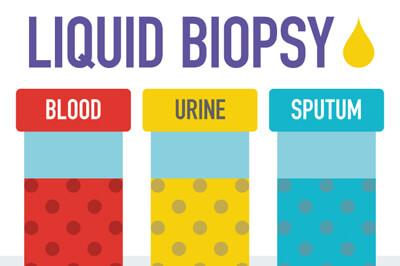
Liquid Biopsy: A new, noninvasive technique that can detect disease biomarkers in blood, urine, and sputum.


View the infographic

In the era of personalized medicine, having minimally invasive methods to determine and follow the molecular composition and characterization of a patient’s tumor over time will help gain a broader understanding of the disease. One such approach is liquid biopsy : measurements to characterize the molecular level of the tumor and monitor genetic changes over time using repeat sampling of biofluids. Liquid biopsy generally refers to detecting and measuring circulating tumor cells (CTC), circulating tumor DNA (ctDNA), circulating exosomes and other analytes in body fluids, such as serum, plasma, urine, etc.

On This Page

  • All Heading 2s will automatically be pulled in to this list.
  • Do not edit the content on this template.

About the Liquid Biopsy Consortium

The Liquid Biopsy Consortium is an Academic/Industrial Partnership program designed to advance and validate Liquid Biopsy technologies specifically targeted for early stage cancer detection. The goal is to test body fluids such as blood, urine, saliva, stool, and sputum from patients suspected to have early stage cancer as well as those at high risk of developing cancer. The Liquid Biopsy Consortium is also working on methods to distinguish cancer from benign disease; or aggressive from indolent cancers. Projects from funded sites focus on the development of new tools/methods/assays and/or validations of existing technologies/methods involving the capture of DNA, RNA, or exosomes in circulating body fluids.

Funding Opportunity

No matching Funding Opportunities were found.

View All Funding Opportunities

Grantee Details

PI Name Sort descending PI Organization Title Grant Number Program Official
Spector, Tim

King'S College London
United States

PROSPECT: Pathways, Risk factors, and mOleculeS to Prevent Early-onset Colorectal Tumors 1OT2CA297289-01 Asad Umar, D.V.M., Ph.D.
Spiegel, Brennan

Cedars-Sinai Medical Center
United States

Randomized Controlled Trial of Virtual Reality for GI Cancer Pain to Improve Patient Reported Outcomes 5R01CA252211-05 Rachel Altshuler, Ph.D.
Spiegel, Brennan

Cedars-Sinai Medical Center
United States

Randomized Controlled Trial of Virtual Reality for GI Cancer Pain to Improve Patient Reported Outcomes 5R01CA252211-05 Rachel Altshuler, Ph.D.
Stachler, Matthew D

University Of California, San Francisco
United States

Optimization and validation of a biomarker panel for risk stratification in Barrett's esophagus 3R37CA269649-03S1 Matthew Young, Ph.D.
Staff, Nathan P

Mayo Clinic Rochester
United States

Investigating the role of MAP2 in chemotherapy-induced peripheral neurotoxicity 5R01CA275870-03 Rachel Altshuler, Ph.D.
Staff, Nathan P

Mayo Clinic Rochester
United States

Investigating the role of MAP2 in chemotherapy-induced peripheral neurotoxicity 5R01CA275870-03 Rachel Altshuler, Ph.D.
Stolley, Melinda R

Medical College Of Wisconsin
United States

Every Day Counts: A lifestyle program for women metastatic breast cancer 5R01CA258759-04 Nancy J. Emenaker, Ph.D., RDN, LD, FAND
Storz, Peter

Mayo Clinic Jacksonville
United States

Deiminated molecules as markers for developing pancreatic cancer - A1 5R21CA279916-02 Matthew Young, Ph.D.
Suga, Jennifer Marie

Kaiser Foundation Research Institute
United States

Kaiser Permanente NCI National Community Oncology Research Program, NCORP 3UG1CA189821-11S1 Vanessa A. White, M.P.H.
Suga, Jennifer Marie

Kaiser Foundation Research Institute
United States

Kaiser Permanente NCI National Community Oncology Research Program, NCORP 3UG1CA189821-11S1 Vanessa A. White, M.P.H.
Sukumar, Saraswati

Johns Hopkins University
United States

Development of an automated, point of care DNA methylation cartridge blood test for colorectal cancer detection in LMICs- an academic-industrial partnership 3R01CA278816-03S1 Matthew Young, Ph.D.
Sun, Ju

University Of Minnesota
United States

SCH: A New Computational Framework for Learning from Imbalanced Biomedical Data 4R01CA287413-03 Claire Zhu, Ph.D.
Suter, Melissa J

Massachusetts General Hospital
United States

Early Detection and Diagnosis of Lung Cancer with Endomicroscopy 5R01CA255326-04 Guillermo Marquez, Ph.D.
Svatek, Robert Scott

University Of Texas Hlth Science Center
United States

eRapa for bladder cancer prevention 5R01CA252057-05 Howard L. Parnes, M.D.
Tabung, Fred Kinyuy

Ohio State University
United States

Role of the inflammatory dietary pattern in gut and colon tissue microbiomes and impact on survival outcomes among colorectal cancer patients 1R21CA294050-01 Amit Kumar, Ph.D.

Program Contact(s)

Sudhir Srivastava, Ph.D., M.P.H.
Email: sudhir.srivastava@nih.gov

Christos Patriotis, Ph.D.
Email: christos.patriotis@nih.gov

Nicholas A. Hodges, Ph.D.
Email: nick.hodges@nih.gov

Guillermo Marquez, Ph.D.
Email: guillermo.marquez@nih.gov