
An official website of the United States government

Liquid Biopsy Consortium

Featured Infographic

Liquid Biopsy: A new, noninvasive technique that can detect disease biomarkers in blood, urine, and sputum.
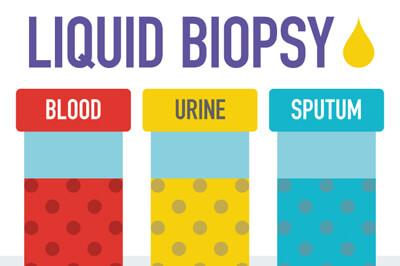
Liquid Biopsy: A new, noninvasive technique that can detect disease biomarkers in blood, urine, and sputum.


View the infographic

In the era of personalized medicine, having minimally invasive methods to determine and follow the molecular composition and characterization of a patient’s tumor over time will help gain a broader understanding of the disease. One such approach is liquid biopsy : measurements to characterize the molecular level of the tumor and monitor genetic changes over time using repeat sampling of biofluids. Liquid biopsy generally refers to detecting and measuring circulating tumor cells (CTC), circulating tumor DNA (ctDNA), circulating exosomes and other analytes in body fluids, such as serum, plasma, urine, etc.

On This Page

  • All Heading 2s will automatically be pulled in to this list.
  • Do not edit the content on this template.

About the Liquid Biopsy Consortium

The Liquid Biopsy Consortium is an Academic/Industrial Partnership program designed to advance and validate Liquid Biopsy technologies specifically targeted for early stage cancer detection. The goal is to test body fluids such as blood, urine, saliva, stool, and sputum from patients suspected to have early stage cancer as well as those at high risk of developing cancer. The Liquid Biopsy Consortium is also working on methods to distinguish cancer from benign disease; or aggressive from indolent cancers. Projects from funded sites focus on the development of new tools/methods/assays and/or validations of existing technologies/methods involving the capture of DNA, RNA, or exosomes in circulating body fluids.

Funding Opportunity

No matching Funding Opportunities were found.

View All Funding Opportunities

Grantee Details

PI Name Sort descending PI Organization Title Grant Number Program Official
Thompson, Patricia Ann

State University New York Stony Brook
United States

Three-Arm randomized trial comparing the effect of aspirin, sulindac or no treatment control on breast density in patients with elevated breast cancer risk 5R01CA235720-05 Edward Sauter, M.D., Ph.D.
Thompson, Patricia Ann

University Of Arizona
United States

University of Arizona Cancer Prevention Clinical Trials Network 2UG1CA242596-07 Donald Johnsey
Tollefsbol, Trygve O

University Of Alabama At Birmingham
United States

Combinatorial epigenetic-based prevention of breast cancer 5R01CA178441-10 Gabriela Riscuta, M.D., CNS
Tong, Frank

Vanderbilt University
United States

Learning the visual and cognitive bases of lung nodule detection 5R01CA240274-05
Toriola, Adetunji T

Washington University
United States

Targeting RANK Pathway in Mammographic Density and Primary Breast Cancer Prevention 5R37CA235602-07 Brandy Heckman-Stoddard, Ph.D., M.P.H.
Torres, Keila Enitt

University Of Tx Md Anderson Can Ctr
United States

Use of Noninvasive Biomarkers and Advanced MRI for early detection of NF1-associated MPNSTs 5R01CA285980-02 Guillermo Marquez, Ph.D.
Tussing-Humphreys, Lisa

University Of Illinois At Chicago
United States

Effects of Time-restricted Eating versus Daily Continuous Calorie Restriction on Body Weight and Colorectal Cancer Risk Markers among Adults with Obesity 5R01CA257807-05 Nancy J. Emenaker, Ph.D., RDN, LD, FAND
Ulrich, Cornelia M

University Of Utah
United States

Adipose tissue-colorectal tumor cross-talk: new targets for breaking the obesity-cancer link 5R01CA254108-05 Asad Umar, D.V.M., Ph.D.
Upshaw, Jenica

Beth Israel Deaconess Medical Center
United States

A randomized trial of cardioprotective strategies in newly diagnosed diffuse large B-cell lymphoma and pre-existing cardiomyopathy or prior anthracycline exposure 1R37CA300969-01 Eileen Dimond, R.N., M.S.
Upshaw, Jenica

Beth Israel Deaconess Medical Center
United States

A randomized trial of cardioprotective strategies in newly diagnosed diffuse large B-cell lymphoma and pre-existing cardiomyopathy or prior anthracycline exposure 1R37CA300969-01 Eileen Dimond, R.N., M.S.
Valdimarsdottir, Heiddis

Icahn School Of Medicine At Mount Sinai
United States

Systematic Light Exposure Effects on Circadian Rhythms Entrainment, Inflammation, Neutropenic Fever and Symptom Burden among Multiple Myeloma Patients undergoing Autologous Stem Cell Transplantation 5R01CA260961-04 Marjorie Perloff, M.D.
Valdimarsdottir, Heiddis

Icahn School Of Medicine At Mount Sinai
United States

Systematic Light Exposure Effects on Circadian Rhythms Entrainment, Inflammation, Neutropenic Fever and Symptom Burden among Multiple Myeloma Patients undergoing Autologous Stem Cell Transplantation 5R01CA260961-04 Marjorie Perloff, M.D.
Veiseh, Omid

Rice University
United States

Bioengineered lymphatic regenerating platform for treatment of breast cancer related lymphedema 1R01HL179534-01 Goli Samimi, Ph.D., M.P.H.
Veiseh, Omid

Rice University
United States

Bioengineered lymphatic regenerating platform for treatment of breast cancer related lymphedema 1R01HL179534-01 Goli Samimi, Ph.D., M.P.H.
Velculescu, Victor E.

Johns Hopkins University
United States

DNA evaluation of fragments for early interception (DELFI) of Lung cancer 5U01CA271896-03 Guillermo Marquez, Ph.D.

Program Contact(s)

Sudhir Srivastava, Ph.D., M.P.H.
Email: sudhir.srivastava@nih.gov

Christos Patriotis, Ph.D.
Email: christos.patriotis@nih.gov

Nicholas A. Hodges, Ph.D.
Email: nick.hodges@nih.gov

Guillermo Marquez, Ph.D.
Email: guillermo.marquez@nih.gov