
Featured Infographic
Liquid Biopsy: A new, noninvasive technique that can detect disease biomarkers in blood, urine, and sputum.
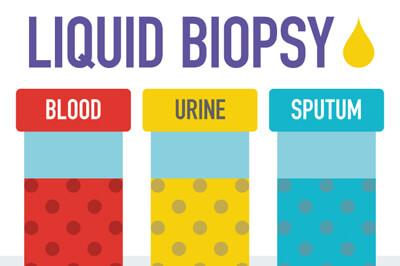
In the era of personalized medicine, having minimally invasive methods to determine and follow the molecular composition and characterization of a patient’s tumor over time will help gain a broader understanding of the disease. One such approach is liquid biopsy : measurements to characterize the molecular level of the tumor and monitor genetic changes over time using repeat sampling of biofluids. Liquid biopsy generally refers to detecting and measuring circulating tumor cells (CTC), circulating tumor DNA (ctDNA), circulating exosomes and other analytes in body fluids, such as serum, plasma, urine, etc.
On This Page
- All Heading 2s will automatically be pulled in to this list.
- Do not edit the content on this template.
About the Liquid Biopsy Consortium
The Liquid Biopsy Consortium is an Academic/Industrial Partnership program designed to advance and validate Liquid Biopsy technologies specifically targeted for early stage cancer detection. The goal is to test body fluids such as blood, urine, saliva, stool, and sputum from patients suspected to have early stage cancer as well as those at high risk of developing cancer. The Liquid Biopsy Consortium is also working on methods to distinguish cancer from benign disease; or aggressive from indolent cancers. Projects from funded sites focus on the development of new tools/methods/assays and/or validations of existing technologies/methods involving the capture of DNA, RNA, or exosomes in circulating body fluids.
Funding Opportunities
No matching Funding Opportunities were found.
Program Contact(s)
Sudhir Srivastava, Ph.D., M.P.H.
Email: sudhir.srivastava@nih.gov
Christos Patriotis, Ph.D.
Email: christos.patriotis@nih.gov
Nicholas A. Hodges, Ph.D.
Email: nick.hodges@nih.gov
Guillermo Marquez, Ph.D.
Email: guillermo.marquez@nih.gov